Thune Faces Backlash Over Delay on House-Passed Bill Cutting Off $40M Weekly Cash Flow to Taliban

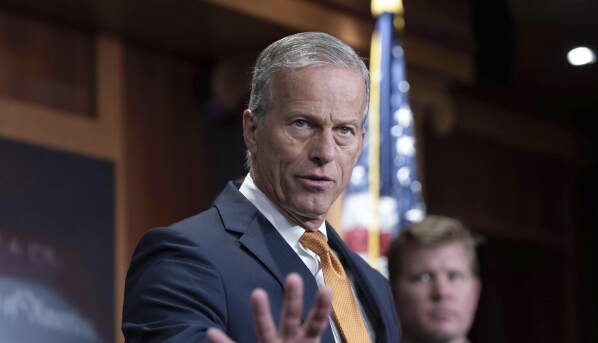
WASHINGTON — Senate Majority Leader John Thune is facing sharp criticism from congressional colleagues following his recent admissions regarding a House-passed bill designed to cut off an estimated $40 million a week in indirect U.S. taxpayer support to the Taliban.
The backlash intensified after Senator Thune indicated unfamiliarity with H.R. 260, the No Tax Dollars for Terrorists Act, and signaled uncertainty over its legislative future.
“I don’t know when. We don’t have that currently on the schedule here… I have not seen it… that’s something that we’d consider putting on the floor at this point,” Thune stated when questioned about scheduling the bill for a full Senate vote.
Legislative Standstill
The No Tax Dollars for Terrorists Act was introduced by Representative Tim Burchett (R-TN) on January 9, 2025, amidst ongoing concerns over the diversion of humanitarian aid. The House of Representatives overwhelmingly passed the legislation nearly eleven months ago on June 23, 2025.
While a companion measure, S. 226, successfully cleared the Senate Foreign Relations Committee and was placed on the Senate Legislative Calendar on February 10, 2026, the legislation has remained stalled without floor action. Critics have contrasted the delay on the bipartisan anti-terror measure with the Senate leadership’s focus on managing recess appointments for the Trump administration.
Mandates of the Bill
The proposed legislation seeks to curb the flow of cash entering Afghanistan by instituting strict oversight and leverage strategies through the State Department. Specifically, the bill requires the federal government to:
- Implement a Counter-Support Strategy: Develop plans to actively discourage foreign countries and non-governmental organizations (NGOs) from providing material or financial aid to the Taliban.
- Leverage Foreign Aid: Condition U.S. foreign assistance to pressure international entities against backing the fundamentalist regime.
- Enact Strict Congressional Reporting: Deliver exhaustive reports tracking U.S.-funded direct cash assistance programs, the management of the Afghan Fund, and the degree of Taliban influence over Da Afghanistan Bank (the nation’s central bank).
The $40 Million Weekly Cash Pipeline
Rep. Burchett and supportive lawmakers have sounded alarms for years over the mechanics of current humanitarian aid delivery. Under existing protocols established following the August 2021 U.S. military withdrawal from Afghanistan, physical shipments of shrink-wrapped U.S. dollars are flown from the Federal Reserve Bank of New York via commercial charter flights directly to Kabul International Airport.
While intended for humanitarian assistance distributed through international organizations, lawmakers warn that these massive cash influxes inevitably enter a banking system entirely dominated by the Taliban regime. Critics argue that every week the Senate delays a floor vote allows another $40 million to bolster the central bank controlled by the terrorist-designated group.
Human Rights Realities in Afghanistan
The legislative battle unfolds against a backdrop of severe regression for human rights in Afghanistan. Since the 2021 collapse of the Western-backed government—which left behind over $7 billion in U.S.-provided military equipment, including thousands of vehicles, aircraft, and weapons systems—the Taliban has systematically erased decades of progress for women.
Currently, approximately 80% of Afghan women have been displaced from the workforce due to sweeping edicts banning females from working in banks, NGOs, government positions, and the United Nations system. A total ban on secondary and higher education for girls remains strictly enforced. Women are legally barred from traveling or accessing basic public services without a designated male guardian, with violations resulting in arbitrary arrests, physical abuse, or death.
Lawmakers urging immediate passage of H.R. 260 argue that American taxpayer dollars must not inadvertently sustain a regime conducting a systemic campaign of gender apartheid and regional destabilization. Leader Thune’s office has not yet provided an updated timeline for when the bill might be called to the floor for a final vote.