Why does the Iranian woman, who risks everything to remove a headscarf, not merit a red pin from Hollywood celebrities at the Oscars?
Why is the Ukrainian family, enduring nights of Iranian-made drones screaming overhead, absent from the red carpet’s moral ledger?
To understand the silence is to understand the discomfort of the Iranian reality.
The Dolby Theatre is an architecture of amplification. Every gilded contour is engineered so that a whisper on stage carries to the back of the house.
On Oscar night, the acoustics serve a dual purpose: They let us year the emotion in a winner’s throat — and broadcast the political conscience of the world’s most famous faces.
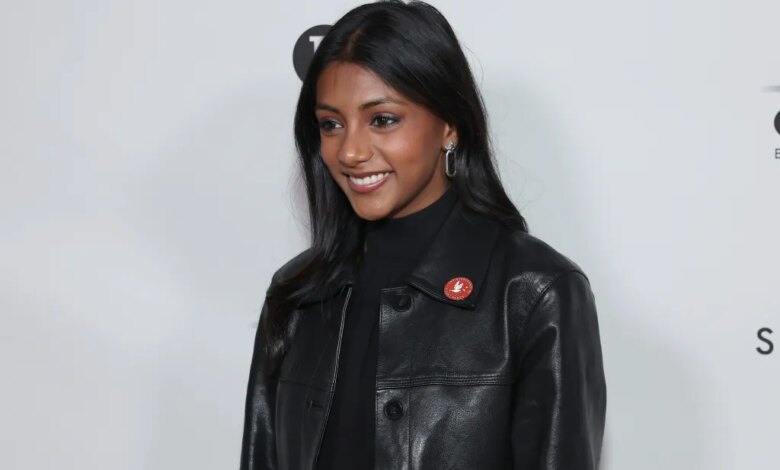
This year, the accessory of choice was once again the red “Artists4Ceasefire” pin — a splash of crimson intended to signal deep concern for the humanitarian crisis in Gaza.
Among those wearing it was “Bridgerton” star Charithra Chandran, who paused on the red carpet to remark how “blessed” she felt to have a platform.
On stage, actor Javier Bardem smugly walked out wearing not one, but two pins. His opening remarks were “No to war and Free Palestine.”
It was a classic Hollywood moment: the intersection of immense privilege and the desire to do good.
But as the cameras flashed, I found myself thinking not about the voices being amplified, but about the silence filling the gaps between the speeches.

Yes, any pro-peace message sounds good at face value, but it does not capture the true intricacies surrounding those facing the harsh reality of war.
There is a peculiar physics to celebrity activism; it tends to congregate where the lights are brightest. We saw this in the recent viral debate surrounding Rachel Zegler’s Harper’s Bazaar interview, where she reflected on “Euro-centric beauty standards” — as if the trailblazing careers of Salma Hayek or Jennifer Lopez had never existed.
It is a recurring Hollywood habit: the tendency to frame one’s own experience as a pioneering struggle while inadvertently erasing the reality of those who came before — or those currently fighting far grimmer battles out of sight.
While Hollywood stars celebrated their “platforms,” millions of Iranians lived behind a digital iron curtain.
In recent years, as the “Woman, Life, Freedom” movement took to the streets, the Islamic Republic responded with a tactic as brutal as it is efficient: the total Internet blackout.
When the regime cuts the cables, they aren’t just stopping social media; they are prepping the ground for violence.
In the darkness of a communication vacuum, activists vanish and students are beaten. The contrast is devastating. In Los Angeles, a platform is a gift used to signal virtue. In Tehran, a platform is a battlefield where the price of a post is often a noose.
For many, activism is easiest when it fits a neat narrative of David versus Goliath.
But the Iranian regime defies simple categorization. It is a colonizing force that exports instability to Lebanon, Yemen, Iraq, and Gaza, funding the very militias that ensure peace remains an impossibility.
The Islamic Republic is the primary engine of the region’s misery. It does not just repress its own; it orchestrates the cycles of violence Hollywood so rightly deplores.
Yet speaking against the regime requires a nuance that doesn’t fit on a lapel. It requires acknowledging that some actors are not seeking a ceasefire, but the total erasure of their neighbors and the permanent subjugation of their own citizens.
As someone instinctively anti-war, I find no joy in the necessity of confrontation. But I am more uncomfortable with the lie that silence is a form of peace.
Peace is not merely the absence of gunfire; it is the presence of justice. And there can be no justice in a Middle East where this regime is allowed to continue its reign of domestic terror and regional arson.
If you are “blessed to have a platform,” the least you can do is shine it into the corners where the shadows are darkest, rather than the most talked about and covered conflict like the Hamas-Israel war (which ended months ago).
The Iranian people have been shouting for years — through the static of throttled internet and the din of protests.
They are asking for exactly what the people in the Dolby Theatre claim to value: freedom, bodily autonomy, and a future free from religious extremism.
The 98th Academy Awards were a masterclass in the selective gaze. We saw the pins and heard the platitudes.
Until the stars of the West find the courage to stand with those fighting the source of the Middle East’s darkness, their activism will remain what it looked like on Oscar Night: a beautiful performance in a room with perfect acoustics, while the world outside is still struggling to be heard.
Hen Mazzig is an author and a creator son of Iraqi and Tunisian Jewish refugees. He is a senior fellow at The Tel Aviv Institute.