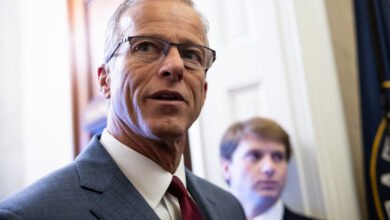
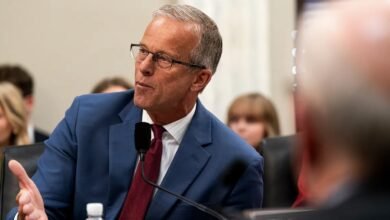
Senate Majority Leader John Thune is letting the clock run out on President Trump’s U.S. Attorney nominees, leaving dozens of the country’s top federal prosecutor offices without leaders and open to court-appointed picks.

WASHINGTON — Dozens of federal prosecutor offices across the country remain without Senate-confirmed leaders as the 119th Congress enters its final weeks, fueling mounting tension between conservative critics, the White House, and Senate Republicans over the pace of judicial and executive confirmations.
Across the nation’s 94 federal judicial districts, roughly half of the top prosecutor posts are currently filled by temporary officials—including interim, acting, first-assistant, and court-appointed U.S. attorneys—rather than permanent, Senate-confirmed appointees. The backlog has become a focal point of frustration among President Donald Trump’s allies, who argue that slow confirmation proceedings have allowed the statutory clock to run out on administration picks and shifted appointment authority to federal district judges.
How the Appointment Clock Works
Under federal law (28 U.S.C. § 546), the U.S. Attorney General may appoint an interim U.S. Attorney to fill a vacancy for up to 120 days. If the Senate does not confirm a permanent nominee before that 120-day window expires, the authority to appoint a replacement passes to the federal district court in that jurisdiction. Court-appointed U.S. attorneys then serve until the vacancy is permanently filled through presidential nomination and Senate confirmation.
Because U.S. attorneys exercise broad prosecutorial discretion—deciding which federal cases to bring, which investigations to prioritize, and what plea agreements to offer—the expiration of interim terms has carried high legal and political stakes. In multiple districts, disputes over the removal and replacement of temporary prosecutors have already triggered legal challenges over who holds lawful authority to lead the offices.
Obstacles on Capitol Hill
The confirmation bottleneck reflects a combination of procedural hurdles and intra-party friction in the Senate:
- Democratic Delays: Senate Democrats have used procedural rules and holds to slow floor consideration of administration nominees, forcing majority leadership to burn scarce floor time on individual cloture votes.
- GOP Resistance and “Blue Slips”: Several nominations have also stalled due to pushback from outgoing Republicans, including retiring Sen. Thom Tillis of North Carolina and Sen. John Cornyn of Texas, who lost his primary bid earlier this year. Both senators sit on the Senate Judiciary Committee and have withheld support for certain nominees in their states or raised objections over administration vetting and Justice Department policies.
- Competing Lame-Duck Priorities: With a new Congress set to convene in January—and Democrats preparing to take the Senate majority following the November midterm elections—Senate Majority Leader John Thune faces a compressed calendar. In addition to government funding bills and legislative packages, Thune has stated that confirming President Trump’s judicial nominees remains a top priority before Republicans relinquish control of the chamber.
Action Continues in Committee
Despite criticism that leadership is running out the clock, Republicans maintain that they are working to confirm as many nominees as possible before the year ends. The Senate Judiciary Committee has continued holding confirmation hearings and executive business meetings into mid-November, advancing a slate of judicial and Department of Justice nominees—including U.S. attorney picks for districts in Tennessee, Oklahoma, and Guam—to the full Senate calendar.
Still, with dozens of executive and judicial nominations pending and limited floor days remaining before the holiday recess, the fate of many unfilled U.S. attorney posts remains uncertain. Any nominations left unconfirmed when the current Congress