San Diego’s 900-mile bike lane expansion sparks backlash over traffic and parking

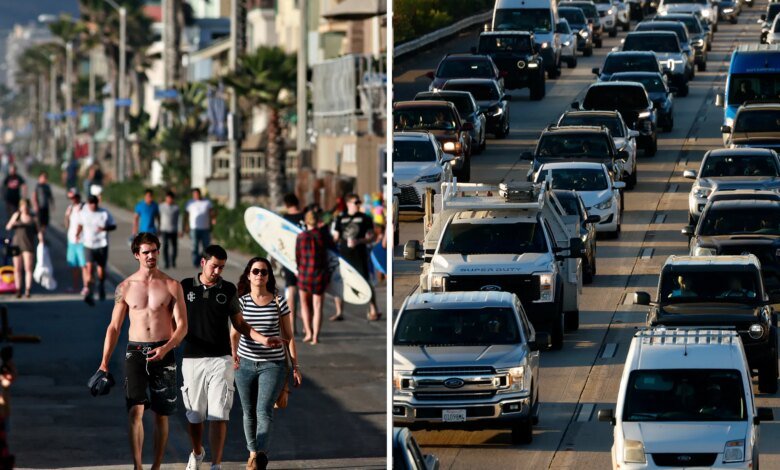
San Diego could soon become a cyclist’s paradise — but the plan to cram more than 900 miles of bike lanes onto the city’s streets is already sparking a fight over traffic, parking and taxpayer money.
The sweeping proposal would dramatically expand the city’s existing bicycle network, which was last updated in 2013, and is expected to go before the City Council in early 2027.
The draft plan calls for an interconnected network spanning 2,025 miles, including more than 600 miles of proposed separated bikeways, also known as cycle tracks.
The city says the expanded network would close gaps between existing routes, connect neighborhoods and give cyclists more access to protected lanes.
“The planned bikeway network closes missing connections, expands access to separated facilities, strengthens neighborhood routes, and includes existing bikeways, projects already underway, community plan recommendations, and regional bikeway projects,” the draft states.
Bike advocates and some city leaders say the overhaul is long overdue, pointing to the growing popularity of electric bikes as a reason to make cycling a more practical option for commuting and running everyday errands, the San Diego Union-Tribune reported.
But opponents fear the changes will turn already congested roads into traffic nightmares by eliminating driving lanes and parking spaces to make room for protected bike routes.
Critics also argue it is going to make a mess of traffic as roads lose lanes and parking spaces to accommodate for separated bicycle lanes, the SD Tribune reported.
They claim that roughly 95% of the city doesn’t use bike lanes for commuting or running errands.
“With San Diego facing significant budget deficits, hundreds of miles of new bike lanes should not be the city’s No. 1 priority,” resident Becky Rapps said.
“Many residents depend on cars for work, families and everyday needs. Not everyone needs a bicycle and the city can’t force people to change how they travel.”
Victoria LaBruzzo, chair of the Community Planners Committee, said residents are already starting to see the impact of separated bike lanes on their neighborhoods.
“Communities are beginning to experience firsthand the significant changes separated bike lanes bring to neighborhood streets, raising concerns about their design, maintenance and overall impacts,” she said.
“Yet many residents, particularly non-cyclists, remain unaware of what’s proposed for their own streets until construction begins.”
Council member Stephen Whitburn backed the proposal during a recent city meeting.
“I see this update as an opportunity to reduce crashes in the city and to make cycling more attractive to residents who genuinely want to ride their bike to work or to school or for recreation, but because their neighborhood lacks a bikeway – or their commute lacks continuous bikeways – they drive their car instead,” Whitburn said.
While fellow councilmember Henry Foster did not support it.
“We are taking our main corridors and we are choking them down,” Foster said. “Literally no explanation goes out to the public.”
A map of the proposed routes is posted on the website, showing the addition of the hundreds of bike lanes all across the city.
The proposal would dramatically increase the number of protected bikeways in the city, from roughly 70 to more than 700 if fully implemented.
It also calls for 120 miles of bike paths physically separated from vehicle traffic and another 270 miles of conventional striped bike lanes for one-way travel.
The different designs range from off-street paths to painted lanes and protected routes separated from cars by curbs, flexible posts and other barriers.
The proposal has also drawn plenty of online criticism, with residents blasting the potential cost and impact on motorists.
“This nonsense needs to stop! Hardly anyone rides bikes in the lanes. It’s destroying Washington St. and SD Ave. by the 5. A kindergartner could design it better. We don’t want this!” one person wrote.
“Too costly and not a high priority. I have four bikes and this not a good use of taxpayer dollars when we have more immediate needs,” another added.
San Diegans have until Monday, Nov. 30, to weigh in on the proposal before officials take it up in early 2027.