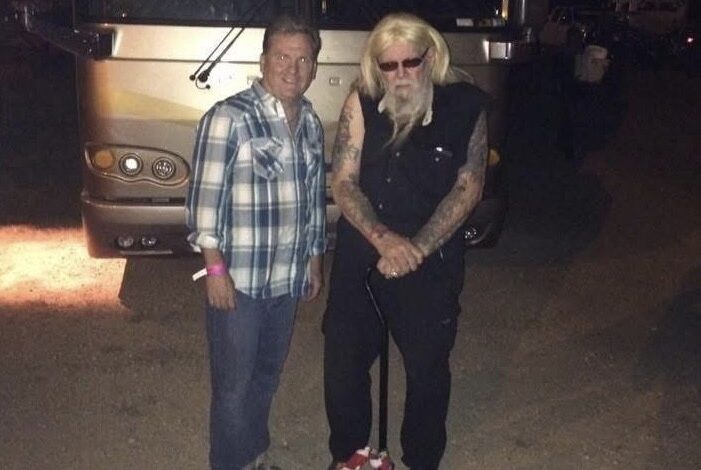
Outlaw country music legend David Allan Coe died Wednesday at the age of 86.
“David was a Country Music treasure and loved his fans,” a representative said, according to People.
“Most importantly, he was a true outlaw and A great singer, songwriter, and performer,” the representative said.
No cause of death was announced.
Coe was known for a handful of hits, including “You Never Even Called Me by My Name,” which was a country Top 10 song written by Steve Goodman and John Prine.
He was also famous for his outlaw persona that followed years in prison when he was a young man.
“I did it,” he said in a 1993 interview. “I was singing that stuff for years. I was living it for years. Willie, Waylon [Jennings] — they just got more famous. I was the original outlaw.”
Coe also wrote songs others made famous. In 1973, Tanya Tucker had a hit with “Would You Lay with Me (In a Field of Stone).”
Johnny Paycheck hit the top of the charts in 1977 with Coe’s “Take This Job and Shove It.”
Hits continued into the 1980s with “The Ride” in 1983, “Mona Lisa Lost Her Smile” in 1984, and “She Used to Love Me a Lot” in 1985.
Coe’s wife, Kimberly Hastings Coe, called him “One of the best singers, songwriters, and performers of our time [and] never to be forgotten,” according to Rolling Stone.
“My husband, my friend, my confidant and my life for many years. I’ll never forget him and I don’t want anyone else to ever forget him either,” she said.
The Ohio-born Coe spoke about his days in prison to the point where some thought the truth had layers of embellishment.
“There were a lot of times when I would actually be in the county jail after being busted and I’d wake up the next morning and say to myself, ‘Oh I’m glad it’s over; I’m glad I’m going back to prison now, where I know I’ll be safe, where I’ll be out of society,’” he once said.
In a 1975 movie, he spoke about prison being a spur that drove him toward fame.
“I’ve found my place in society. And it’s not in a prison,” he said. “I no longer have to come back here and have everybody knowing who David Allan Coe is; now everybody on the street knows who I am. So I still get that satisfaction of being somebody.”
Coe recorded two albums where themes of sex and race drew the condemnation of The New York Times. The newspaper’s suggestions that he was a racist upset him, People reported.
“I’ve got a black drummer who’s married to a White chick,” Coe once told Country Standard Time. “I’ve got Leon Spinks pictures all over my bus, pictures he took with my family. My hair’s in dreadlocks. I’m the farthest thing from a white supremacist that anybody could ever be.”
At one time, Coe wrote about the albums, “I was a young man living with a motorcycle club… I had given up on any commercial success and country radio wouldn’t play my songs anyway… I made these albums for bikers to play at parties… Not everyone appreciates biker humor, even in music,” he wrote.
“I don’t apologize for these albums, because they are very funny, but don’t expect me to sing these songs at my shows!” he added.
A working man figure to the end, Coe battled the IRS in his final years, and in 2016 was ordered to pay $1 million.