Michael Goodwin: Trump gave Iran a chance at peace — but the president cannot trust the mullahs

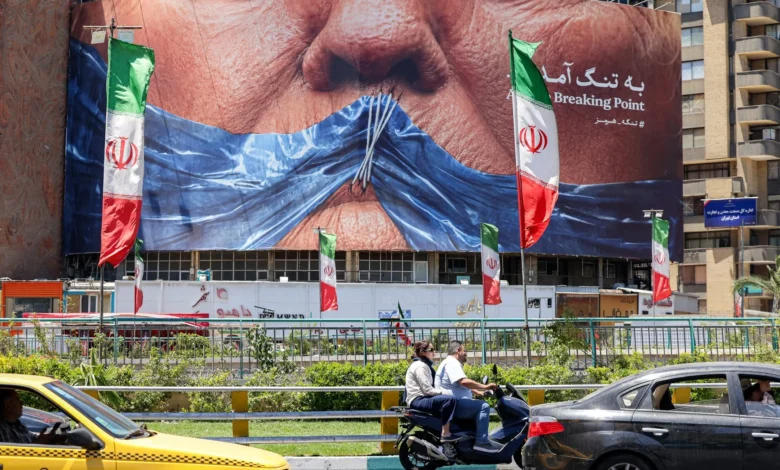
The news that President Trump has taken the unusual step of calling a full Cabinet meeting Wednesday suggests that, among other things, he’s exploring ways to jump-start the maddeningly slow talks with Iran.
The brainstorming is necessary because it is crystal clear that Trump gave peace a chance, a very good chance, but the mullahs aren’t willing to meet his generous terms.
The big question now is whether there is anything more within reason he can do to sweeten the offer, or whether Iran simply has no intention of ever getting to yes.
No doubt there also will be a political dimension to the conversations, in that the war is unpopular at home and growing more so the longer it goes on.
Its effect on rising energy prices and inflation are a major part of the GOP worry that Trump’s party could lose control of both chambers of Congress in November.
Impeachment of the president would likely be among the Democrats’ first orders of business.
As they proved in his first term, they don’t need facts to bring charges — only party unity around the idea that voters made a mistake or were deceived. It’s their way of overturning elections.
Cease-fire under stress
Moreover, the stakes in Iran are growing again because even the tenuous cease-fire is coming under severe stress.
The US conducted what it called “self-defense” airstrikes late Monday against two Iranian ships it said were laying mines in the Strait of Hormuz.
The US also said it took out a surface-to-air missile site based at Iran’s primary naval station that was targeting our warplanes.
In response, Iranian Supreme Leader Mojtaba Khamenei threatened to strike American military bases elsewhere in the region.
The skirmishing is the latest sign that the mullahs have no intention of voluntarily meeting Trump’s top demand for peace.
For more than a decade, he has been saying the same thing: that Iran will never be allowed to have a nuclear weapon on his watch.
Bombing Iran’s nuclear sites is why he joined Israel’s 12-day war last year, and why he teamed up again with the Jewish state for the current war in February.
Thankfully, he has not budged an iota and has laid out precisely how Iran can meet his terms and also bring the conflict to a swift conclusion.
All the mullahs would have to do is give up or destroy about 1,000 pounds of uranium enriched to different levels of purity, most of it buried under tons of rubble at three different sites destroyed by American bombers.
The fact that the regime can’t get to yes on that core issue shows it would rather return to a full-scale war than give up its uranium stockpiles.
In effect, the rejection reveals how committed the mullahs remain to their doomsday scenario of destroying Israel and the United States.
Obviously, the fact that they would rather sacrifice more of their leaders, people and energy infrastructure than make a reasonable deal illustrates their continuing commitment to the global revolutionary cause that gave birth to the Islamist regime nearly 50 years ago.
A personal grudge against Trump is also playing a major factor in the stalled talks, according to a report in The Wall Street Journal.
It cites Iranian officials and Arab mediators as saying Iran has two main goals in the negotiations.
Petty mullahs
One is getting financial relief for its strained economy, but doing so “without giving enough ground on its nuclear program to allow President Trump to claim victory.”
How petty is that?
The outlet also reported that Iran said Tuesday it would retaliate for the latest American strike, which it called a violation of the cease-fire.
“Without a doubt, the Islamic Republic of Iran will not leave any evil unanswered and will not hesitate to defend the Iranian nation,” Iran’s Foreign Ministry said in a statement.
Even that wasn’t enough to satisfy some of the regime’s hardest hard-liners.
Majid Mousavi, the Revolutionary Guard commander in charge of Iran’s drone and missile program, said even the “negotiation with the enemy is pure loss.”
In advance of his Cabinet summit, the president has added a new demand on our regional allies to try to get things moving forward and establish a more permanent peace.
He has said that Gulf Arab monarchies and others who would benefit from an end of hostilities with Iran would also be required to join the Abraham Accords, meaning they would have to recognize Israel’s right to exist and establish formal trade and other relations.
Trump engineered the historic accords in his first term, and now aims to expand them by stressing that the benefits of an Iran accord for Arab states and even Turkey would be so great that making a final peace with Israel would be the logical next step and the best way to secure lasting peace for the entire region.
He wrote that “after all the work done by the United States to try and pull this very complex puzzle together,” meaning an Iran deal, “it should be mandatory that all of these countries, at a minimum, simultaneously sign onto the Abraham Accords.”
The president said he brought up the idea with some of those leaders during negotiations on Saturday, but didn’t provide details about their responses.
Hezbollah complication
The Hezbollah-Israel conflict in Lebanon is another complication.
Trump has urged Prime Minister Benjamin Netanyahu not to do anything that would jeopardize chances of a deal with Iran.
But the demand has put Israel in a bind, because Hezbollah has continued to fire rockets into northern Israel and its fighters are digging in close to the border.
The US has urged the Lebanese government to crack down on the Iranian-funded proxy, but the hard truth is the Lebanese military is outgunned by the terror army.
All of which leaves the president with the same two options he has had all along.
Keep talking with Iran, even without much progress, or unleash the dogs of war again, with the hopes the regime finally feels enough pain to meet his reasonable demands.
In that sense, the push for the other Muslim states to establish relations with Israel can be seen as something of a Hail Mary.
The odds of total success are low, but it’s worth a try because the payoff would be enormous.
And given how much those nations will need America going forward, Trump has hit on an idea that has the potential to diminish regional rivalries and expand the list of those committed to a larger and lasting peace.
Imagine, too, the economic impact of a united Mideast.
It would be so enormous that even Iran might come to its senses and join the party.