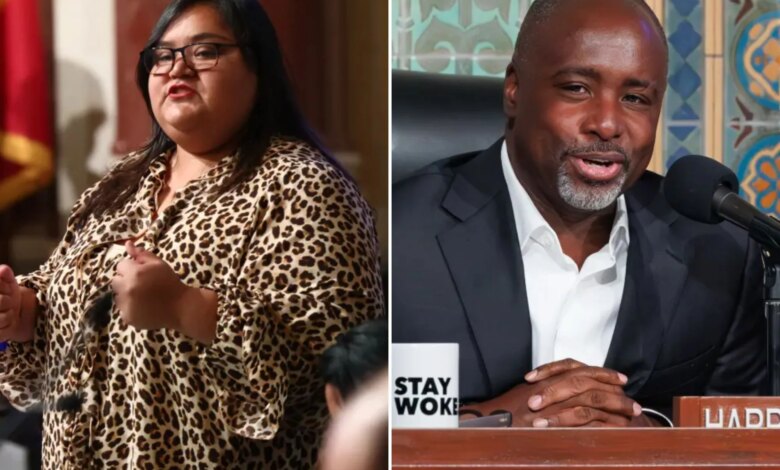
The Los Angeles City Council voted 14-0 to advance restrictions on police traffic stops rooted in one dangerous idea: That cops enforcing traffic laws are somehow the real threat on the streets of LA.
Not the drunk driver.
Not the gang member carrying an illegal gun.
Not the reckless driver blowing through intersections at 90 miles per hour.
The cops.
Only in LA could elected officials look at street disorder and decide the problem is still too much policing.
Read the motion that passed and the message is obvious: Los Angeles is now governed by people who start with suspicion of the LAPD.
Their presumption seems to be that officers are out there waiting to abuse motorists unless City Hall puts another leash on them.
The chief architect of this madness is City Council President Marqueece Harris-Dawson, who has spent years trying to move traffic enforcement away from police officers.
On his own official city website, Harris-Dawson says LA policing has relied on traffic stops “as a method to fish for potential criminal suspects.” He also declares that “it is unnecessary to have armed law enforcement stopping people for vehicle code violations.”
That is not public safety policy. That is an attack on public safety, dressed up as reform.
Harris-Dawson described the council’s latest action as merely a “down payment.”
Download The California Post App, follow us on social, and subscribe to our newsletters
California Post News: Facebook, Instagram, TikTok, X, YouTube, WhatsApp, LinkedIn
California Post Sports Facebook, Instagram, TikTok, YouTube, X
California Post Opinion
California Post Newsletters: Sign up here!
California Post App: Download here!
Home delivery: Sign up here!
Page Six Hollywood: Sign up here!
Good to know. Because that tells every Angeleno this is phase one.
The more radical parts of the original proposal were watered down only after city leaders ran into the kind of obvious questions normal people would have asked at the beginning.
For example:
What is an unarmed civilian traffic officer supposed to do when a driver refuses to comply?
Ask nicely?
What happens when the driver is drunk, armed, wanted, or violent?
What happens when the “routine” traffic stop suddenly is not routine at all?
Because traffic stops are not customer-service calls.
They are unpredictable law enforcement encounters on the side of the road, often with officers approaching unknown people inside multi-thousand-pound vehicles.
Yet the people running Los Angeles talk about policing as though this were a graduate-school seminar.
Meanwhile, in the real world, traffic stops routinely lead police to illegal guns, wanted suspects, impaired drivers, gang members and violent criminals.
LAPD Chief Jim McDonnell has repeatedly defended traffic enforcement as a critical public safety tool.
The Los Angeles Police Protective League was even more blunt, warning that abandoning enforcement could turn city streets into a “demolition derby.”
That may sound dramatic.
Then again, so does replacing cops with civilian traffic hall monitors in a city already drowning in crime, chaos and collapsing public confidence.
And let’s be clear: this was not some fringe activist resolution pushed by one eccentric councilmember.
Fourteen members of the LA City Council voted for it.
Not voting was Councilwoman Traci Park, who probably has more common sense than all of these other folks put together.
Nobody voted no.
Nobody stood up and said this was reckless.
Nobody asked whether ordinary families might prefer serious enforcement against dangerous drivers over another City Hall social experiment.
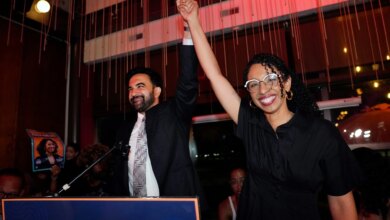
Not even mayoral candidate Nithya Raman, whose vote only reinforces her already well-established anti-police posture.
That matters.
Because this attitude is no longer confined to activists screaming through megaphones at protests.
It is sitting behind the dais at Los Angeles City Hall.
And it wants more power.
Mayor Karen Bass has had little to say publicly while City Hall moves closer to treating routine policing itself as suspect. And given the amount of media coverage, it suggests she is choosing to be silent.
The people running Los Angeles have become so insulated and so captured by anti-police thinking that they now treat law enforcement itself as the problem.
That is the real story here.
Not traffic stops.
Not taillights.
Not registration tags.
The people running LA have the world completely upside-down.
Jon Fleischman, a longtime strategist in California politics, writes at SoDoesItMatter.com.