NEWYou can now listen to Fox News articles!
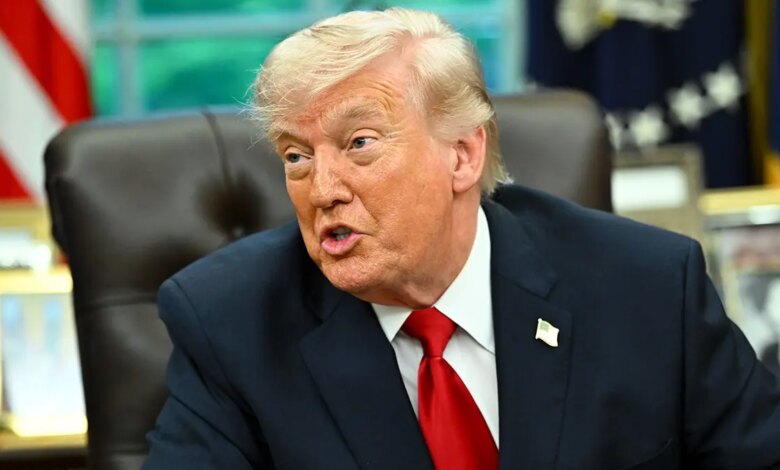
President Donald Trump’s effort to broadly pull U.S. troops from key NATO allies over resistance to the Iran war could run into new limits imposed by Congress, but the administration may have a way around them.
Trump ordered the withdrawal of 5,000 troops from Germany Friday, a drawdown which will happen over the next six to 12 months, according to Pentagon spokesperson Sean Parnell.
Lawmakers have restricted large-scale troop reductions in Europe below 76,000.
But Trump still retains broad authority as commander in chief to move forces between countries, opening the door to shifting troops away from allies like Germany, Spain or Italy without reducing the overall U.S. presence.
Pentagon orders withdrawal of 5,000 U.S. troops from Germany as Trump escalates feud with Merz
The warning follows pushback from allies including Spain and Italy, which have limited how U.S. forces can use key bases for Iran-related missions, highlighting tensions inside NATO as Washington presses partners for support during the escalating conflict.
Trump said Wednesday the U.S. is “studying and reviewing the possible reduction of troops” in Germany, comments that came after Chancellor Friedrich Merz said the U.S. was “being humiliated” by Iran.
Merz downplayed the spat between Washington and Berlin in a statement Thursday.
“On all these issues, we maintain close and trusting contact with our partners, including — and especially — those in Washington. We do so in the shared transatlantic interest. We do so with mutual respect and a fair sharing of burdens.”
German foreign minister Johann Wadephul said in his own statement: “The Ramstein Air Base serves an irreplaceable function for both the US and us.”
President Donald Trump’s effort to broadly pull U.S. troops from key NATO allies over resistance to the Iran war could run into new limits imposed by Congress, but the administration may have a way around them. (Graeme Sloan/Bloomberg via Getty Images)
Asked on Thursday whether he’d consider pulling troops out of Italy and Spain, Trump said, “Yeah, probably… Why shouldn’t I?”
The comments come as both countries have resisted U.S. requests tied to operations in Iran.
“Italy has not been of any help to us,” the president said, adding that Spain has been “horrible, absolutely horrible” and citing their refusal to allow the U.S. to use jointly operated bases for missions related to the conflict.
Any major withdrawal, however, would face hurdles in Congress.
Under the latest defense bill, the Pentagon cannot reduce U.S. troop levels in Europe below 76,000 without submitting an assessment and certifying to lawmakers that the move would not harm U.S. or NATO security interests.
“The provision does not prohibit the administration from going below 76,000, but it does establish hurdles it would have to clear,” Jeff Rathke, president of the American-German Institute at Johns Hopkins University and a former State Department official, told Fox News Digital.
Key US ally blocks airspace to military flights over Iran, escalating standoff with Trump
Congress cannot directly veto a troop withdrawal, but lawmakers can impose conditions and restrict funding, effectively slowing or blocking any significant drawdown if those requirements are not met.
The provision reflects recent concern in Congress over potential troop reductions, rather than a long-standing requirement in defense legislation. The restriction applies to total U.S. troop levels in Europe, not deployments in individual countries.
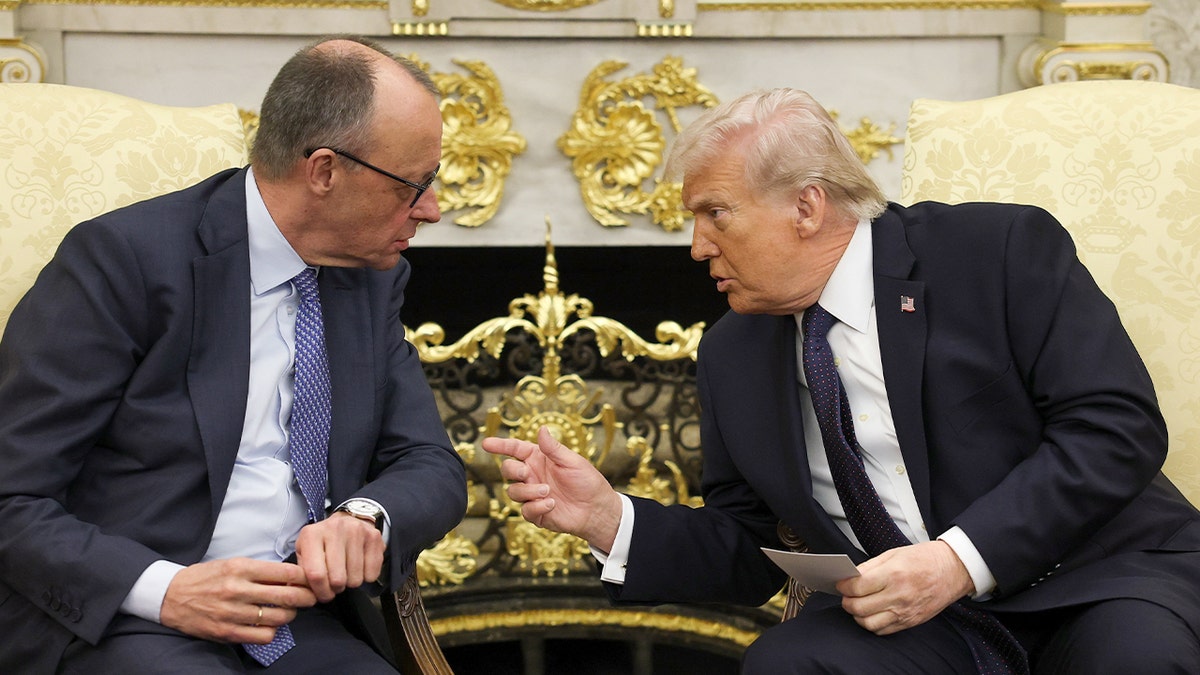
President Donald Trump and German Chancellor Friedrich Merz met in the Oval Office at the White House in Washington, D.C., on March 3, 2026, to discuss issues including recent U.S. and Israeli strikes on Iran. (Win McNamee/Getty Images)
NATO itself does not have veto power over U.S. troop deployments, which remain a national decision, though basing agreements depend on cooperation with host countries.
The U.S. currently has about 36,000 troops in Germany, about 13,000 in Italy and around 4,000 in Spain — three of the largest American military footprints in Europe.
Germany and Italy host key U.S. bases that serve as logistics hubs for operations in the Middle East, meaning any significant drawdown could complicate efforts tied to the Iran conflict itself.
That has raised the stakes for how Trump responds to allied resistance.
Seth Jones, a defense analyst at the Center for Strategic and International Studies, said the president likely has the authority to reposition or even withdraw forces, but warned that doing so raises broader questions about military strategy during an ongoing conflict.
“My issue is less the legal authority, but rather the strategic rationale behind a withdrawal — especially if it is done for political, rather than strategic, reasons,” Jones said.
He pointed to the role of key bases in Europe, including Rota in Spain, which supports rapid-response operations into North Africa, and Germany, which serves as a hub for deployments across both European and African theaters.
“The Russian threat to Eastern Europe remains serious,” Jones added, noting that some U.S. bases in Germany are positioned outside the range of certain Russian missiles and drones.
Jones also warned that relocating forces could carry significant costs and logistical challenges, adding to the complexity of any decision to scale back the U.S. presence.
The administration has pressed European allies to provide more direct support for operations tied to the Iran conflict, including broader access to bases and participation in efforts to secure key waterways such as the Strait of Hormuz.
But several countries have stopped short. Spain has imposed restrictions on how U.S. forces can use jointly operated bases, while Italy has allowed American troops to continue operating from its territory but limited how those facilities can be used for certain missions.
Germany has taken a more mixed approach, allowing operations from bases like Ramstein while publicly criticizing the administration’s strategy.
That dynamic has raised the possibility of alternatives to a full withdrawal, including shifting troops within Europe rather than reducing overall force levels.
Rathke said such a shift could avoid triggering the congressional threshold, since it applies to overall troop levels rather than deployments in specific countries.
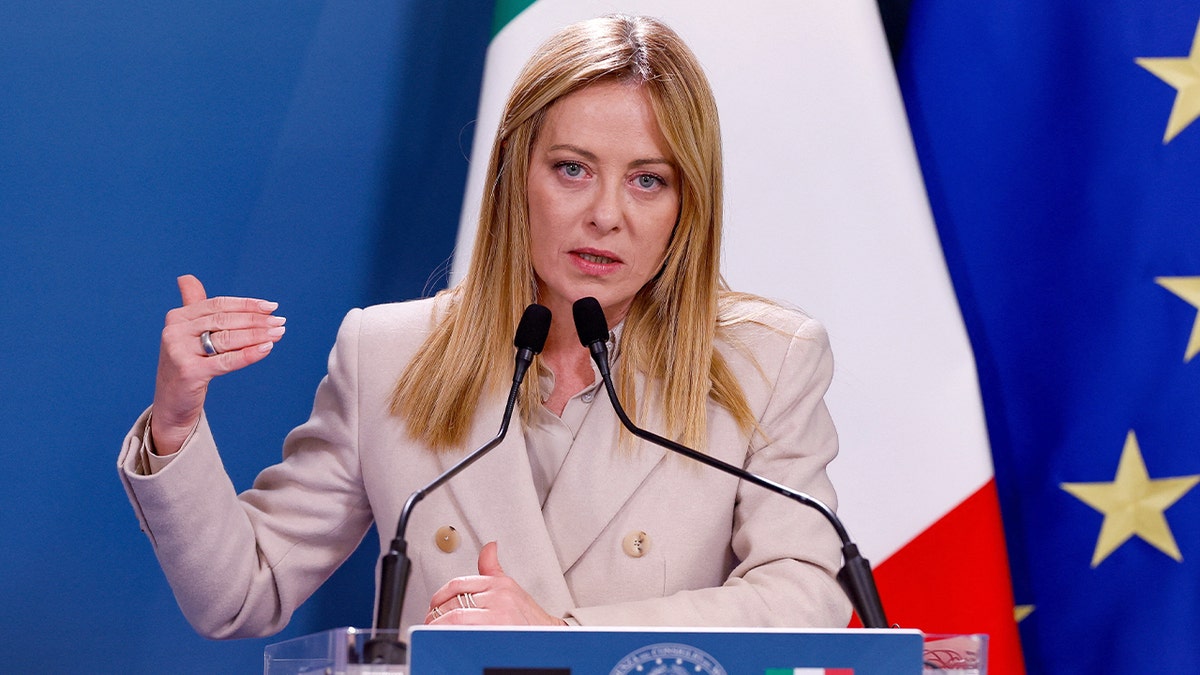
Italian Prime Minister Giorgia Meloni speaks during a joint statement at the conclusion of Italian-German government consultations in Rome on Jan. 23, 2026. (Remo Casilli/Reuters)
But he cautioned that major relocations would be difficult in practice, noting that key infrastructure — including Ramstein Air Base and the Landstuhl Regional Medical Center — cannot easily be replicated elsewhere.
“Even the most willing European country would not be able to offer that in the short term,” he said.
Even if troop levels remain above 76,000, major relocations would likely require funding and infrastructure changes that would bring Congress back into the process.
Lawmakers have stepped in before to block troop withdrawals from Europe, and a new push could trigger scrutiny on Capitol Hill, especially if it’s seen as weakening U.S. positioning during an ongoing conflict.
CLICK HERE TO DOWNLOAD THE FOX NEWS APP
A similar clash played out during Trump’s first term, when he ordered the withdrawal of roughly 12,000 U.S. troops from Germany in 2020, arguing that Berlin was not contributing enough to NATO defense. Congress imposed conditions through the annual defense bill, requiring the Pentagon to certify that any drawdown would not undermine NATO or U.S. operations. The effort ultimately stalled and was never fully implemented.
Lawmakers have not yet publicly responded to Trump’s latest comments. The White House did not return a request for comment.