NEWYou can now listen to Fox News articles!
President Donald Trump warned that “a whole civilization will die tonight” as a deadline looms for Iran to agree to U.S. demands, escalating his rhetoric even as last-minute negotiations continue through intermediaries to avert sweeping military strikes.
Trump has set a Tuesday night deadline for Iran to accept terms that include reopening the Strait of Hormuz, a critical global oil artery, as U.S. officials — including Vice President JD Vance — continue back-channel talks through intermediaries such as Pakistan.
But significant gaps remain, and the president’s latest comments raise the risk the U.S. may move forward with strikes targeting Iranian infrastructure, including power and transportation systems and beyond.
TRUMP REVEALS IRAN MADE ‘SIGNIFICANT PROPOSAL’ AFTER ULTIMATUM, BUT ‘NOT GOOD ENOUGH’
Trump’s latest remarks mark a sharp escalation from earlier warnings focused on infrastructure. He also suggested Iran had undergone “complete and total regime change, where different, smarter, and less radicalized minds prevail.”
Mojtaba Khamenei was named Iran’s supreme leader after U.S. strikes killed his father, Ali Khamenei, though his current status and control remain unclear amid conflicting reports. A U.S.-Israeli intelligence memo reported by The Times in the UK said that Khamenei is unconscious and being treated for a “severe” medical issue, and is unable to be involved in any Iranian decision-making.
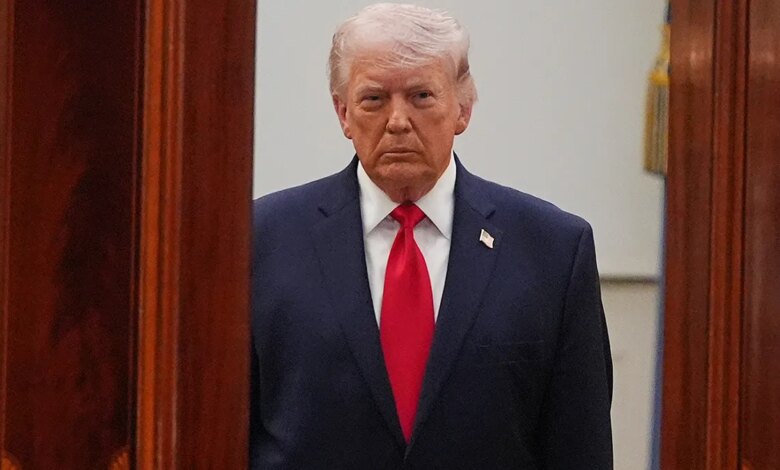
President Donald Trump arrives from the Blue Room to speak about the Iran war from the Cross Hall of the White House on Wednesday, April 1, 2026, in Washington. (Alex Brandon/AP)
Diplomatic efforts to avert a wider conflict are ongoing but increasingly strained, with mediators including Pakistan, Egypt and Turkey working to broker a ceasefire and reopen the Strait of Hormuz before broader talks can begin.
“We are absolutely in touch with” Iran, a senior U.S. official told Fox News. “Absolutely. (The talks) have been positive. If we get lucky, we will have something by the end of the day.”
Iran repeatedly has rejected a temporary truce in favor of a permanent end to the war, while U.S. officials have dismissed Tehran’s proposals as insufficient, leaving key differences unresolved as the deadline approaches.
Trump underscored the threat in a profanity-laced Truth Social post Sunday, declaring that “Tuesday will be Power Plant Day, and Bridge Day” in Iran and warning that the country’s infrastructure would be destroyed if it did not reopen the Strait of Hormuz. He told Iran to “open the F—in’ Strait … or you’ll be living in Hell.”
As the deadline nears, the conflict is already intensifying on the ground. Airstrikes hit parts of Iran’s capital city of Tehran Tuesday, while Iranian officials urged civilians to form human chains around power plants in an effort to deter potential U.S. attacks on critical infrastructure, Iranian state media reported.
Overnight, the U.S. struck dozens of military sites on Kharg Island — including bunkers, radar stations and ammunition storage facilities — a senior U.S. official told Fox News. The island is Iran’s primary oil export hub, making it one of the regime’s most critical economic assets.
By targeting military sites while avoiding energy infrastructure, the strikes suggest the U.S. is applying pressure while holding Iran’s oil lifeline at risk as a potential next step if the deadline passes without a deal.
Israel also has signaled a potential expansion of the target set to include Iran’s rail network, warning civilians to avoid trains ahead of possible strikes. Rail lines play a critical role in moving military forces and equipment, particularly in and out of Tehran, and disrupting them could significantly limit Iran’s ability to reposition assets and sustain operations.
While Trump has centered his deadline on reopening the Strait of Hormuz, the negotiations have expanded into a broader dispute over ending the war, including Iran’s nuclear and missile programs, sanctions relief and security guarantees — issues that remain unresolved as both sides clash over what concessions must come first.
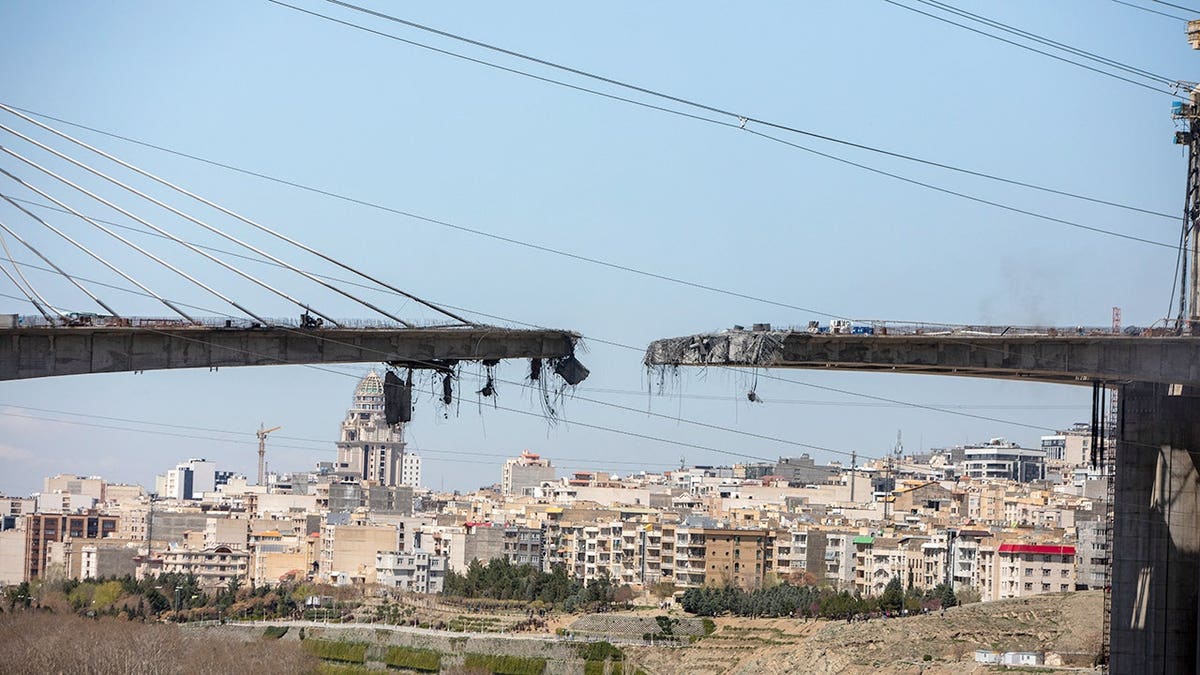
A view of the damaged B1 bridge, a day after it was destroyed by an airstrike, on April 3, 2026 west of Tehran in Karaj, Iran. (Majid Saeedi/Getty Images)
Trump’s “civilization” remarks have raised new questions about whether the potential U.S. target set could extend beyond bridges and power plants to include additional infrastructure or systems tied to the Iranian regime’s ability to maintain power.
IRAN’S TALLEST BRIDGE COLLAPSES AFTER REPORTED US AIRSTRIKES, IRAN THREATENS AMERICAN ALLIES IN RETALIATION
Trump has warned that “every bridge in Iran will be decimated” and that power plants could be left “burning, exploding and never to be used again” if Tehran fails to meet his demands, underscoring the scale of potential infrastructure strikes.
Trump also has repeatedly extended similar deadlines in recent weeks, delaying threatened strikes as negotiations continued before issuing new ultimatums. The pattern has raised questions about whether the latest deadline will hold — or serve as another pressure tactic in the final hours of talks.
Iran’s blockade of the Strait of Hormuz — through which roughly a fifth of the world’s oil passes in peacetime — already has sent shockwaves through global markets, raising pressure on the administration to reach a resolution while increasing the stakes of any potential military escalation.
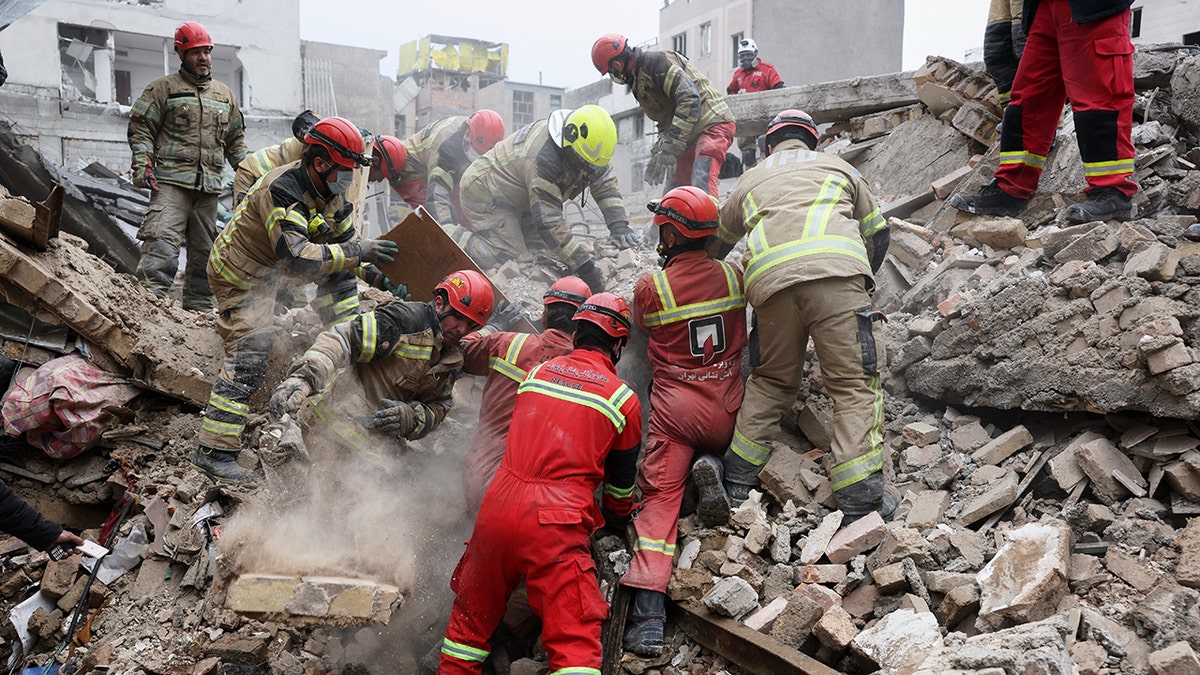
Rescue workers search for survivors in the rubble after a strike in southern Tehran, Iran, Friday, March 13, 2026. (Sajjad Safari/AP)
Military options now on the table
Trump’s rhetoric has fueled questions about how far a potential U.S. strike campaign could extend beyond the infrastructure targets he has publicly identified.
Military analysts say options range from continued infrastructure strikes aimed at crippling Iran’s ability to function to a broader campaign targeting the regime’s core power centers.
The White House rapid response team shot down a post on X which quoted Vance and suggested it implied “Trump might use nuclear weapons.”
“Literally nothing @VP said here “implies” this, you absolute buffoons.”
“The Iranian regime has until 8PM Eastern Time to meet the moment and make a deal with the United States. Only the President knows where things stand and what he will do,” press secretary Karoline Leavitt said in a statement.
A U.S. operation could focus on disabling Iran’s electrical grid, transportation networks and energy facilities — a strategy designed to create nationwide disruption and pressure leadership. Such strikes could trigger cascading effects across communications, water systems and industrial production and would impact the civilian population.
Other options could involve further targeting of leadership, facilities tied to the Islamic Revolutionary Guard Corps, including command-and-control nodes, weapons production sites and economic assets that fund the regime’s operations.
Gregg Roman, executive director of the Middle East Forum, said the president’s language suggests a focus on dismantling the regime’s underlying power structures rather than targeting Iran as a nation.
“I really think that what he’s talking about are the fundamental roots and the anchors of the Islamic Republic, not of the country of Iran,” Roman said.
“Everything that the United States would target in a hypothetical attack on power plants, bridges, other key points of infrastructure would really have to focus on those that are connected to the ability of the generals who are currently in charge of this regime and their ability to maintain power,” he added.
CLICK HERE TO DOWNLOAD THE FOX NEWS APP
Roman said Trump’s reference to “civilization” likely reflects the 47-year rule of the Islamic Republic rather than Iranian society as a whole.
“I don’t think he’s speaking about Persian civilization. I think he speaking about the 47 years that the Islamic Republic has ruled as a polity.”
Iranian officials have called on civilians to help protect key infrastructure. Earlier, Iranian official Alireza Rahimi issued a video message calling on “all young people, athletes, artists, students and university students and their professors” to form human chains around power plants.
Iranian Preisdent Masoud Pezeshkian said Tuesday that Iranians are willing to give their lives in defense of Iran.
“More than 14 million brave Iranians have so far declared their readiness to sacrifice their lives to defend Iran. I have also sacrificed my life for Iran, I am, and I will continue to do so,” he wrote on X.
Fox News’ Bill Hemmer and Jennifer Griffin contributed to this report.