FBI Director Kash Patel’s flamboyant lifestyle hits agency morale — while terror attacks strike US

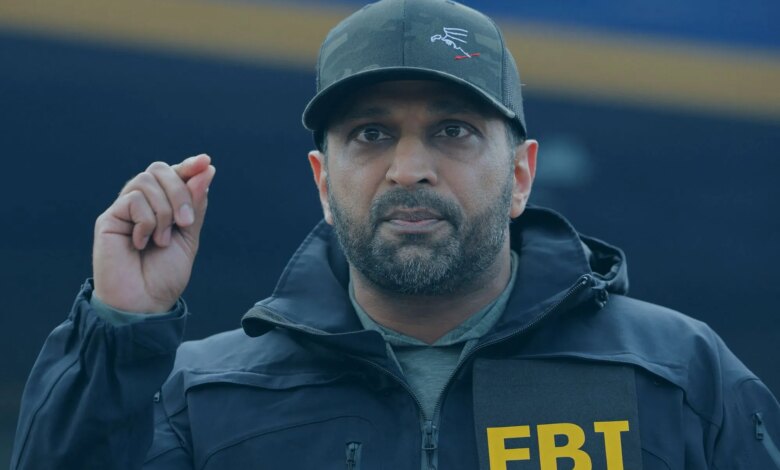
The day Operation Epic Fury began in Iran, FBI Director Kash Patel announced he was putting the bureau’s counterterrorism and intelligence teams on “high alert” for threats to the homeland over concerns about terror attacks from Tehran or its proxies.
“While the military handles force protection overseas, the FBI remains at the forefront of deterring attacks here at home,” Patel tweeted.
The same day, the Department of Homeland Security issued a law enforcement bulletin warning of potential lone-wolf attacks on home soil by “US-based violent extremists or hate crime perpetrators.”
A few hours later, Senegalese migrant and naturalized US citizen Ndiaga Diagne, 53, opened fire on a crowded bar in Austin, Texas, killing three people and injuring 13 while wearing a “Property of Allah” hoodie and an undershirt with an Iranian flag design.
After he was shot dead by police, a Quran was found in Diagne’s car and photographs of Iranian regime leaders at his home, leading the FBI to conclude that the attack was “potentially an act of terrorism” and the Texas Tribune immediately to report an alleged surge in “Islamophobia” and “anti-Muslim backlash.”
Obviously, it’s not Islamophobia that is the problem. Since Austin, there have been three more Islamist terrorist attacks on home soil.
Feds ‘disengaged’
On the Upper East Side of Manhattan last weekend, Islamic State adherents Emir Balat, 18, and Ibrahim Kayumi, 19, allegedly tossed powerful homemade bombs at police and anti-Muslim protesters outside Gracie Mansion. Balat yelled “Allahu akbar” as he allegedly threw one of the bombs, which were packed with screws and bolts to cause maximum carnage, as well as the volatile “Mother of Satan” explosive used in deadly terror attacks overseas.
Only by the grace of God did both bombs fizzle out before they could kill and maim everyone within a two-block radius.
On Thursday, in the predominantly Jewish neighborhood of West Bloomfield, Mich., Ayman Mohamad Ghazali, a 41-year-old naturalized citizen from Lebanon with reported Hezbollah connections, rammed a truck packed with explosive material into a synagogue and started firing his gun through the windshield. He was shot by security guards and then shot himself dead, according to police.
Less than two hours earlier and 700 miles away, at Old Dominion University, in Norfolk, Va., Mohamed Bailor Jalloh, a naturalized US citizen from Sierra Leone who previously had been jailed over an Islamic State terror plot, yelled “Allahu akbar” before opening fire in an ROTC classroom, murdering the instructor, Lt. Col. Brandon Shah, before being killed by his students.
How could a guy on supervised release, who was freed early from a Pennsylvania prison 16 months ago after serving eight years for trying to carry out an Islamic State attack, poss ibly be allowed to attack again?
“This person should have been made known to the FBI’s Counterterrorism Division, Threat Screening Center, and Criminal Justice Information Services [the largest division of the FBI] at a minimum,” says one former high-ranking FBI agent who prefers to remain anonymous.
“The [interagency] National Counterterrorism Center should have been engaged on some level, as well.
“Not sure if any of these components were actually aware and engaged on any level, even in the current elevated threat environment.”
So much for the FBI being on “high alert.”
Purge in bureau
The cascading recent attacks point to a failure of the FBI, the primary agency for “deterring attacks here at home,” as Director Patel boasted.
It is an outcome insiders have warned about, even before Patel gutted the elite FBI counterintelligence team that investigated Iranian threats in America, according to the New York Sun and CNN.
The dozen or so agents, analysts and support staff who were fired last month from the CI-12 unit had worked on special counsel Jack Smith’s witch hunt against Donald Trump and reportedly were zealous enough to subpoena records of phone calls made by Patel and White House chief of staff Susie Wiles when they were private citizens.
Whether they were liabilities or “just following orders,” the latest purge has sent a chill through the ranks. Another former FBI agent says that a “culture of fear” has paralyzed all levels of bureau leadership at present. Folks are all afraid to do their jobs for fear of losing their heads.
The other former agent says that the FBI should now urgently run a review of the most recent attacks to see “what flagging systems were in place and active . . . and what kinds of potential investigative, watch-listing, screening, and threat monitoring activities were required.”
The agent said, “The FBI should be directly questioned on these matters and be able to provide clear responses on their prior knowledge and applicable actions for the [most recent] two attackers.
“If not, then this violence will continue to happen and intensify” as the Iran offensive progresses.
To be fair, Patel has a difficult task rooting out rogue actors responsible for weaponizing the FBI against Trump and conservatives, but his high-profile private life, flamboyant style and devotion to flying to sporting events at home and abroad in the FBI jet don’t help morale.
The FBI costs taxpayers $11 billion a year, and at a time of increasing threats, we expect it to be competent enough to keep us safe.
You can’t assign all the blame to Patel after just 14 months in the job. The rot set in long ago under President Barack Obama, when Director James Comey, and later Chris Wray, diverted FBI expertise and resources away from genuine threats toward the phantom menace dreamed up by Democrats of domestic terrorists such as Trump-supporting grandmas, traditional Catholics and parents at school board meetings.
Unfocused leadership
Demoralized agents quit or took early retirement in those years, but there are those who stayed on in hope of positive reform under the Trump administration who now express disappointment in what they regard as Patel’s unfocused leadership, preoccupation with his own image and mercurial purges.
Again, to be fair, the FBI has foiled numerous Islamist terror plots in recent times, albeit often thanks to local law enforcement.
For instance, an 18-year-old was charged in an ISIS-inspired terror attack planned for New Year’s Eve in North Carolina, and a 22-year-old was nabbed in Texas in December over another ISIS plot, both discovered in a sting operation by the NYPD.
But those successes are all the more reason why the FBI’s focus should have zeroed in on countering threats of Islamic terrorism rather than diverting agents onto immigration enforcement and other unrelated tasks, such as, reportedly, spending hours redacting names in the Epstein files.
“While the FBI has considerable resources, such resources are limited — even in the national security mission area,” says the former senior agent.
“It is a zero-sum situation. When people are being redirected away from their primary national security duties, some things are bound to be missed — especially in the area of proactive threat identification and mitigation.”
The FBI did not respond to questions on Sunday.